January 15, 2025·📚 Books
How to Tell If a Failure is Intelligent

My copy of Right Kind of Wrong, picked up at the Foreign Languages Bookstore ↗ in Shanghai and read through my Uni days there.
Right Kind of Wrong ↗ is one of my favourite non-fiction books. I presented it at a ‘1% Better Every Week’ session at work, a weekly ritual where each of us would share something we believe would make everyone on the team better founders.
Amy Edmondson (the Novartis Professor of Leadership and Management at Harvard Business School, twice ranked the world’s number one management thinker by Thinkers50) has spent decades studying how teams learn, fail, and grow. Her book Right Kind of Wrong ↗ builds on that work. Its central argument is that not all failures are equal, and the goal is not to eliminate failure but to fail well.
Not all failures are created equally
She draws a clear taxonomy.
Basic failures are errors in familiar terrain, caused by inattention, overconfidence, or neglect.
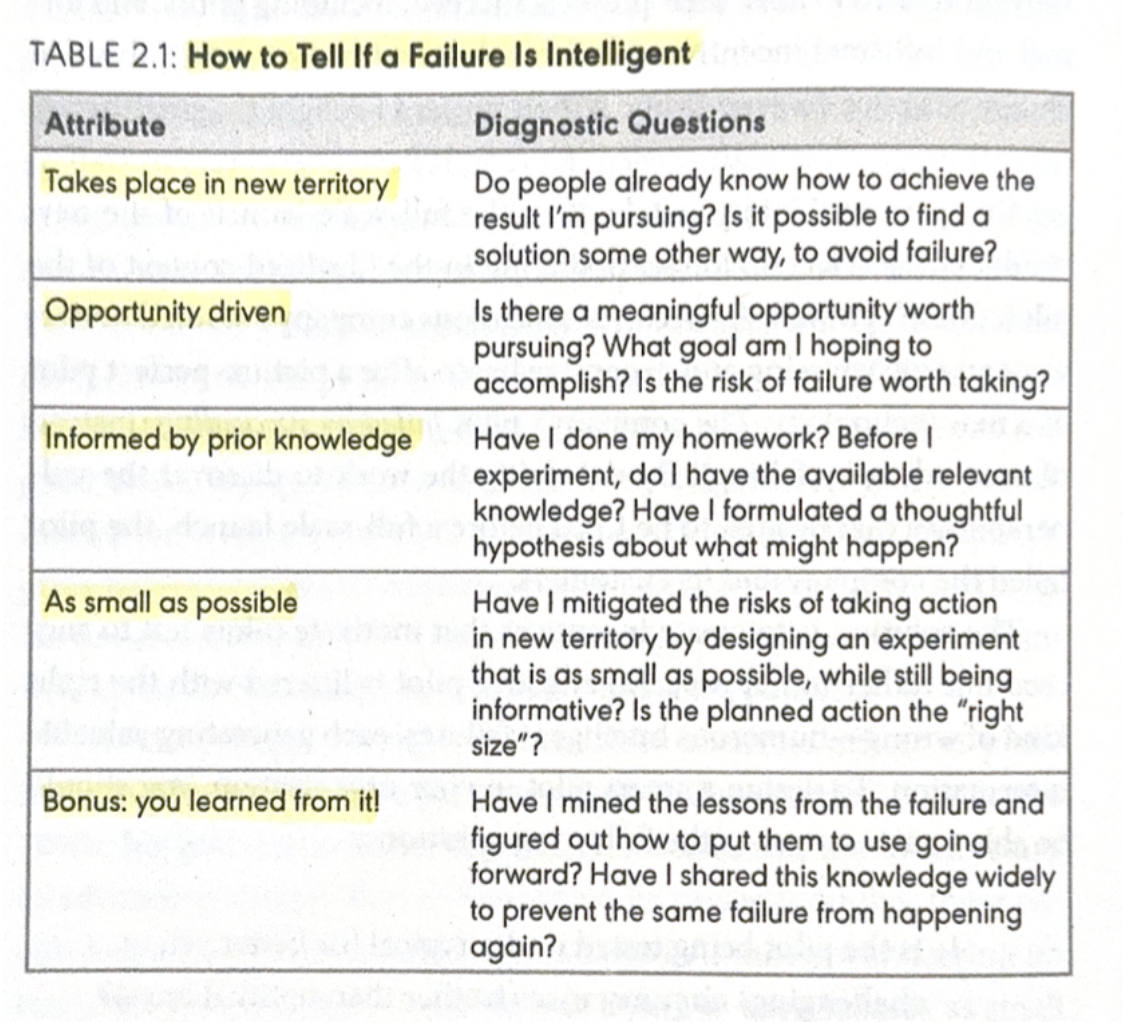
Complex failures arise when many factors converge in unexpected ways. And intelligent failures happen when you are operating in new territory, where no recipe exists and experimentation is the only honest way forward.
Intelligent failures are not errors. The word error implies there was a right answer you missed. In genuine new territory, that answer often does not yet exist. Intelligent failures are the price of discovery.
Psychological safety makes this possible
None of this works in an organisation without the conditions that allow honest information to surface. Psychological safety is a shared belief within a team that it is safe to speak up, to ask questions, flag concerns, and report failures, without fear of blame or humiliation.
Three things become possible when psychological safety exists:
- people ask for help when they need it;
- they report errors before they compound;
- and they experiment in thoughtful ways.
Crucially, psychological safety is a property of the team, not of individual personality. It is shaped by how those around you respond when things go wrong, and that can be changed.
Deep tech, and why this all connected for me
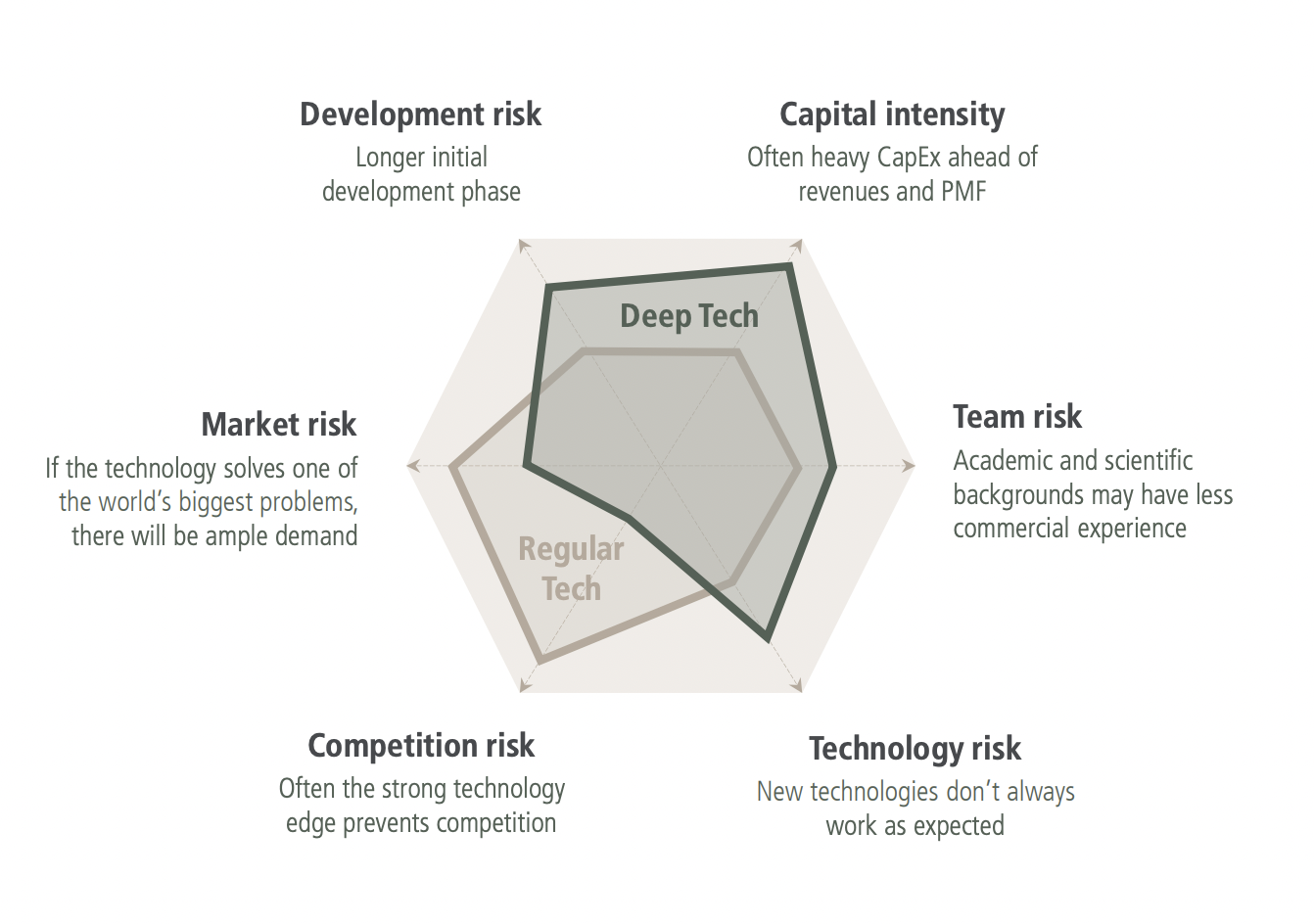
I kept returning to it once I started working in deep tech. Deep tech ventures carry a particular burden. Development risk is high; the path from lab to product is rarely straight. Capital intensity is severe, with heavy spending well before product-market fit. Teams often come from academic and scientific backgrounds: brilliant at research, less experienced in the commercial realities of building a company. And the underlying technology may simply not behave as expected, because that is the nature of working at the frontier.
I remember scrolling through LinkedIn one day and landing on the news that Orbex, a company I had been in touch with, had gone into administration. Founded in Scotland in 2015, they had spent a decade building Prime, a 3D-printed, biofuel-powered microlauncher designed to cut launch emissions by 90% and become the UK’s first sovereign orbital rocket. They were on the cusp of their first test flights when the money ran out. They had raised nearly $100 million, and secured a preselection from ESA’s European Launcher Challenge.
To call that a mere failure felt wrong. Orbex had expanded what European rocketry could do. They had worked at the frontier, produced novel technology, and moved the entire field forward, and the knowledge does not disappear with the company.
Final thoughts and a quote my Mom loves
Edmondson also reminded me that “to err is human”. This framework does not try to make us immune to mistakes, but it gives us something rather useful. It gives us the ability to tell the difference between a mistake that could have been avoided and an intelligent failure, one that advances you and that was simply the cost of doing something genuinely new. That distinction matters enormously, both for how I look at how organisations are run and for how I carry my own individual setbacks.
“The only man who never makes a mistake is the man who never does anything.”